Évariste Galois
A Life Cut Short
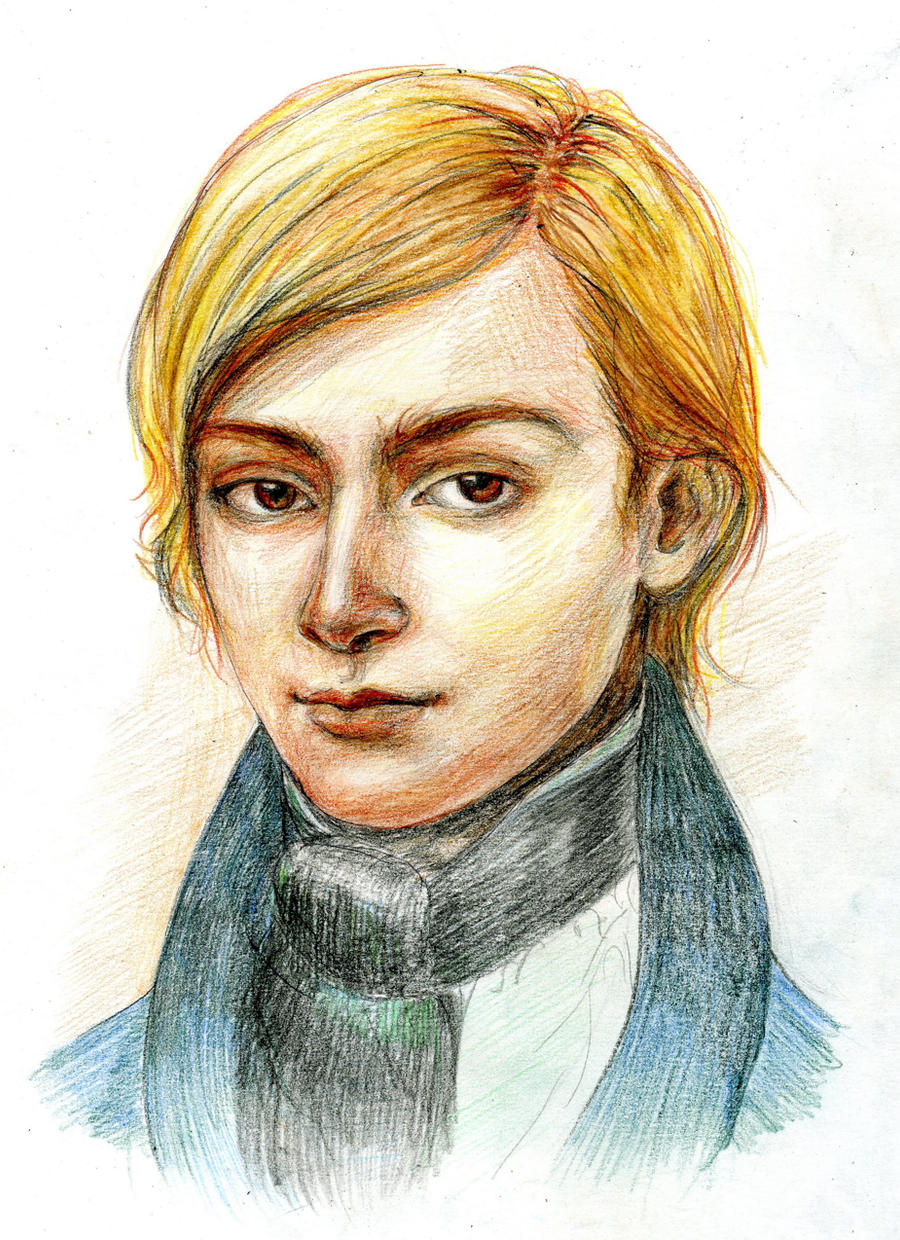
Évariste Galois lived only twenty years, yet his contributions to mathematics would echo through the centuries. Born in 1811 in a small town near Paris, Galois showed extraordinary mathematical talent from an early age, though his genius was rarely recognized by his contemporaries.
His life was a storm of brilliance and frustration. Twice rejected by the prestigious École Polytechnique, Galois instead attended the École Normale. His radical political views during the turbulent years following the French Revolution of 1830 led to imprisonment and expulsion from school.
The Night Before the Duel
On May 29, 1832, knowing he would face a duel at dawn over a mysterious affair of honor (possibly involving a woman), Galois spent the entire night writing feverishly. He documented his mathematical discoveries in letters to friends, scribbling in the margins: "I have not time".
The next morning, he was shot in the abdomen and died the following day, abandoned in a hospital with only his younger brother at his side. He was just twenty years old.
— Évariste Galois to his brother
A Revolutionary Legacy
What Galois created in those final desperate hours would transform mathematics forever. He developed group theory and solved a problem that had vexed mathematicians for centuries: determining when polynomial equations can be solved by radicals.
His work lay unrecognized for over a decade until the great mathematician Joseph Liouville reviewed his papers and declared them sound. Today, Galois theory is fundamental to modern algebra, with applications reaching from quantum mechanics to cryptography.
Galois's story is one of unrecognized genius, of a mind too advanced for its time, and of the cruel irony that his most important work was produced in the shadow of his own death. He remains an enduring symbol of both the beauty of pure mathematics and the tragedy of potential unfulfilled.